Dhyana Nada
Sacred Sound for Modern Stillness
M A N T R A · M E D I T A T I O N · B H A K T I
N O W . U N F O L D I N G
The 108 Series
Nine sacred mantras. Nine weeks. One daily ritual.


M A Y 3 . . . J U L Y 3 , 2 0 2 6
A M U L T I - Y E A R P R O J E C T
Kurukshetra
The Bhagavad Gita, voiced in character — as it was originally spoken, on the battlefield.
700 verses. 18 chapters. A multi-year arc.
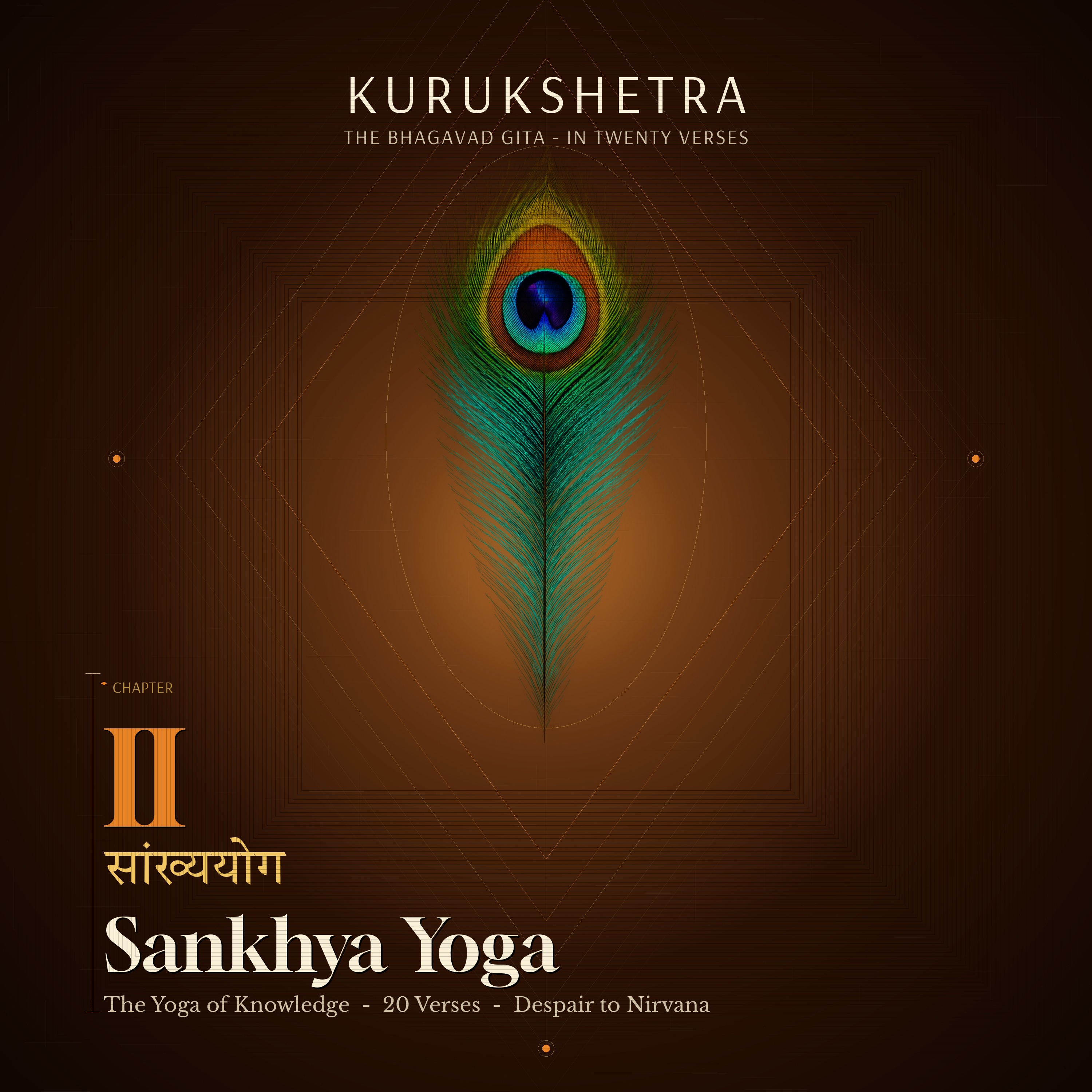
Chapter II
Sankhya Yoga
The Yoga of Knowledge · 20 verses, 67 minutes · Out May 21, 2026
The chapter where Krishna actually starts teaching. Includes Karmany Evadhikaras Te, the most cited verse of the entire Bhagavad Gita, plus the funeral verse Na Jayate Mriyate, the cloth-change analogy Vasamsi Jirnani, and the chapter's closing landing on Brahma-Nirvana. Sanskrit chant in Krishna's voice across 8 continuous tracks. Scripture as cinema.
Chapter I (Arjuna Vishada Yoga · 16 verses) released May 14, 2026.
C H A P T E R I I . . . C H A P T E R X V I I I
L A T E S T R E L E A S E
Kurukshetra
Chapter II
Sankhya Yoga · The Yoga of Knowledge · 20 verses, 67 minutes
- 2.1 Tam Tatha Kripayavishtam · Sanjaya sets the scene
- 2.2 - 2.10 Krishna's first words · Arjuna's surrender · the smile
- 2.11 - 2.19 The atma teaching · the Self cannot die
- 2.20 Na Jayate Mriyate · the funeral verse
- 2.21 - 2.25 Vasamsi Jirnani · the cloth-change analogy
- 2.26 - 2.38 Kshatriya Dharma · the equanimity bridge
- 2.39 - 2.46 Karma Yoga opens · the Veda critique
- 2.47 Karmany Evadhikaras Te · THE most cited Gita verse
- 2.48 - 2.53 Yoga-Sthah Kuru Karmani · yoga is skill in action
- 2.54 - 2.72 The Sthitaprajna teaching · closing on Brahma-Nirvana
F U L L C A T A L O G
Releases


L I S T E N E V E R Y W H E R E
Stream
+ Tidal · Deezer · Pandora · Anghami · Boomplay · iHeartRadio · 12 more
A B O U T
Dhyana Nada is sacred sound for modern stillness. Born from the meeting of ancient Sanskrit mantra and contemporary production, the project crafts devotional music for morning practice, deep meditation, and the quiet space before sleep.
Each release follows the rhythm of traditional sadhana — patient, intentional, and rooted in bhakti. Mantras are chanted in the count of 108, the sacred number that opens the heart and quiets the mind, recorded with the voice and instrument that each mantra calls for.
C O N N E C T